
About All Tours From Bangkok ToursBoat Cruise ToursBike ToursDay Trip ToursPrivate Tours Directions Hours & Fees
Find Tours 
Founded in 1351, this 289-hectare archaeological park preserves the stone temples and monasteries of Siam's second capital. Today, visitors walk among the remnants of a global trade center that housed roughly 1,000,000 people before its destruction by the Burmese army in 1767.
Find Guided ToursFormally known as Phra Nakhon Si Ayutthaya, this major archaeological site serves as an open-air museum of ancient Thai architecture. The historical park covers 289 hectares on a man-made island at the confluence of the Chao Phraya, Pa Sak, and Lopburi rivers. Situated 80 kilometers north of Bangkok, the area features the ruins of massive stone temples, reliquary towers known as prangs, and historic monasteries.
King Ramathibodi I founded the city on March 4, 1351. For 417 years, Ayutthaya operated as the second capital of Siam. Under the reign of 33 successive kings, it grew into a major global center for commerce and diplomacy between the 14th and 18th centuries. At its peak in the 1700s, the urban area supported a population of roughly 1,000,000 people, making it one of the largest cities in the world at the time.
This period of immense prosperity ended abruptly in 1767. The Burmese army invaded and almost completely destroyed the city, forcing the relocation of the Siamese capital south to Thonburi and eventually Bangkok. Today, the remnants of over 400 temples stand as a testament to the city's former scale. Recognizing its historical and architectural value, UNESCO designated Ayutthaya a World Heritage Site in 1991.
Visitors can observe distinct architectural styles across the surviving structures. Wat Phra Si Sanphet retains three massive, well-preserved bell-shaped chedis that once held royal ashes. Nearby, Wat Chaiwatthanaram displays Khmer-style design with a 35-meter central prang positioned along the riverside. Other notable artifacts include a 42-meter-long reclining Buddha at Wat Lokayasutharam and the sandstone Buddha head naturally entwined in the roots of a Banyan tree at Wat Mahathat.
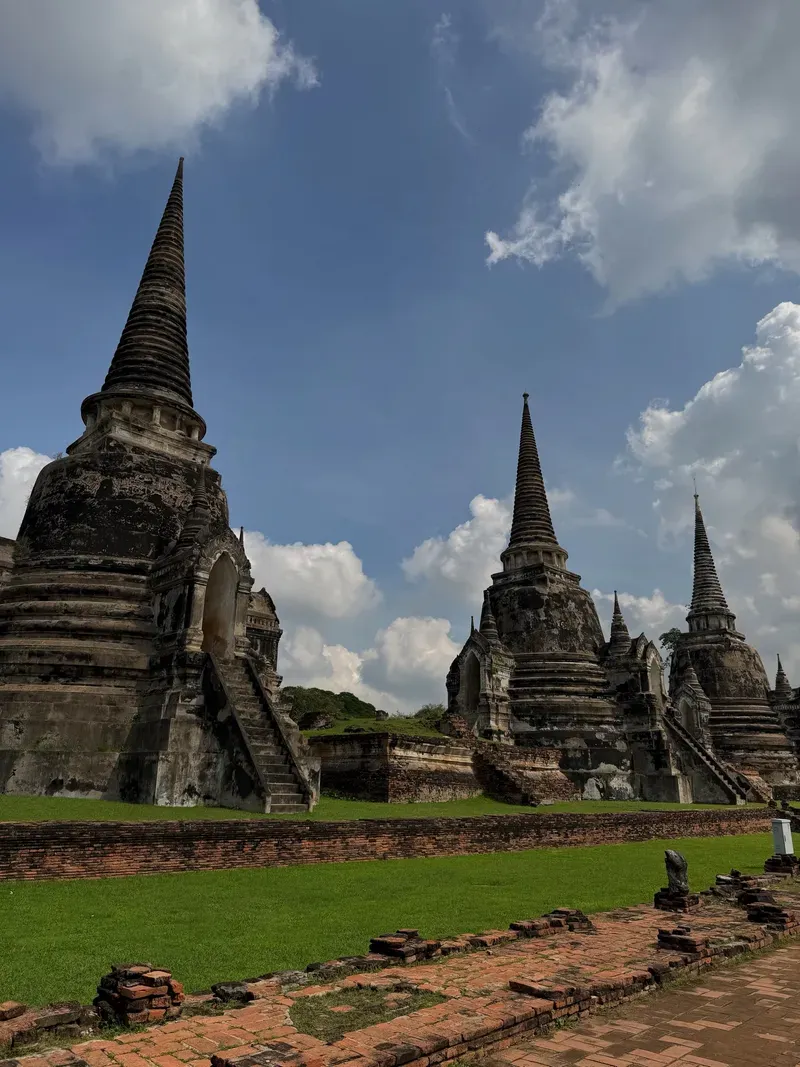
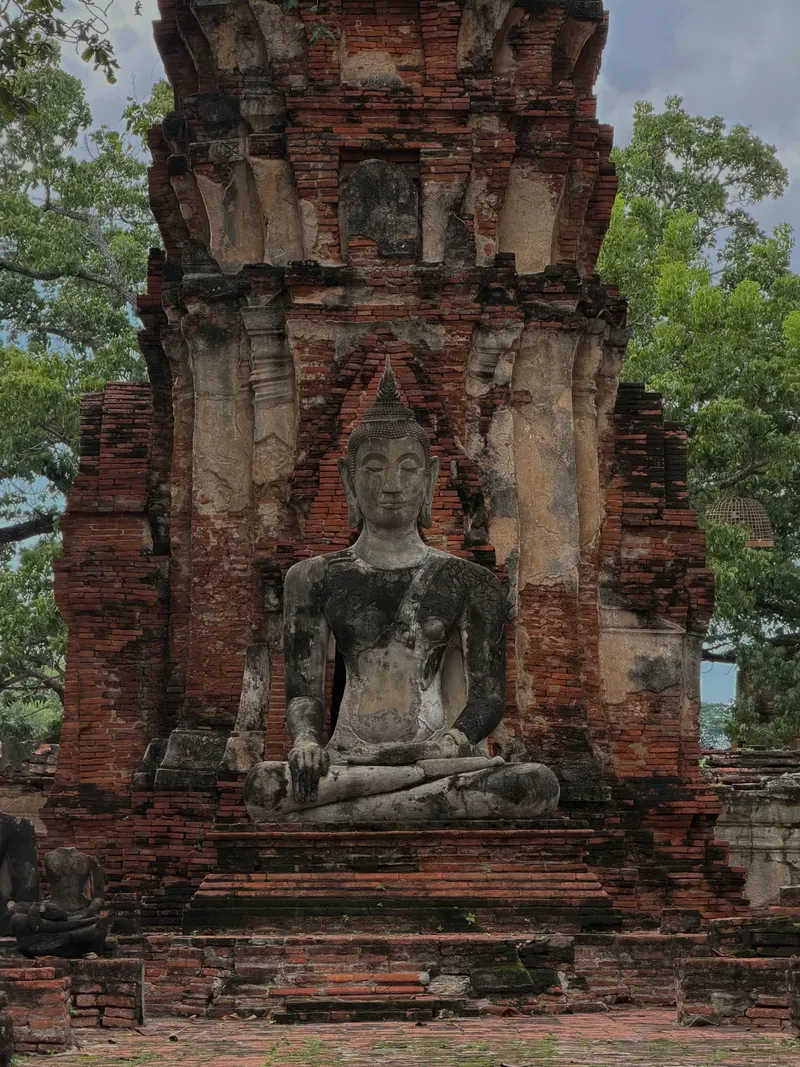
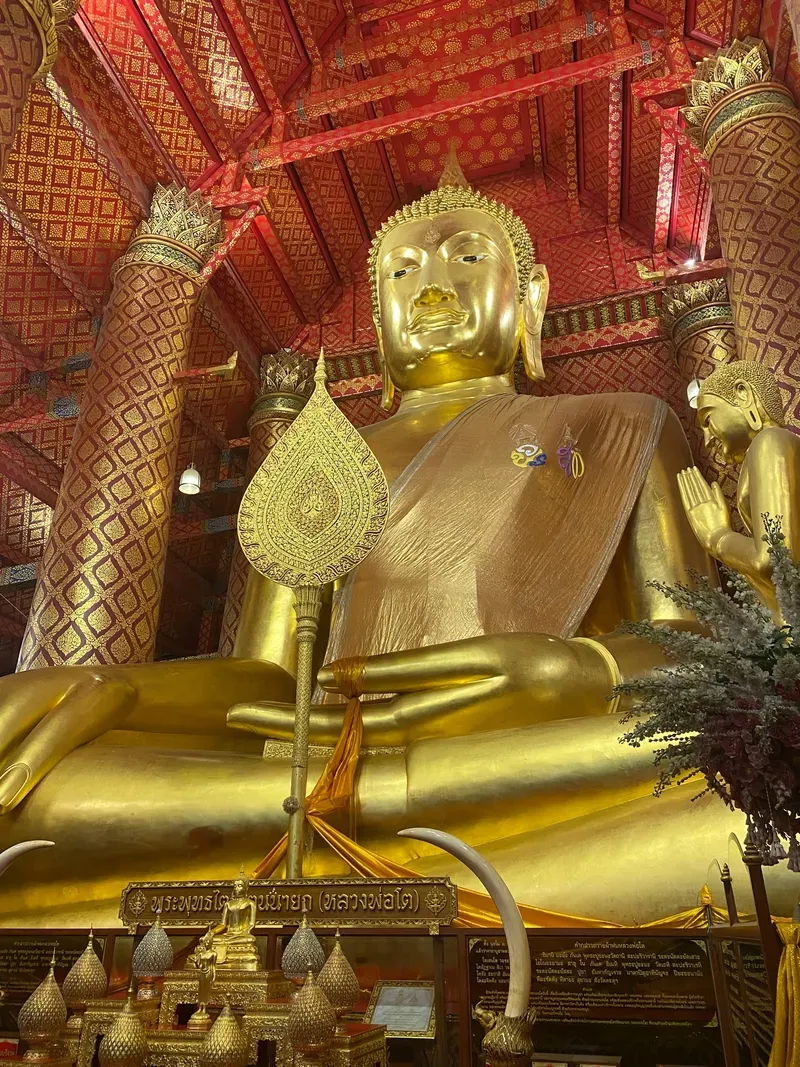

Discover the full history and cultural significance on our About page.
Wat Mahathat sits near the center of the 289-hectare historical park. A sandstone Buddha head rests naturally entwined within the roots of a Banyan tree. You must kneel to ensure you remain lower than the sacred image. The site stays open until 06:30 PM.
This Khmer-style riverside temple features a massive 35-meter central prang. Arriving late in the day lets you watch the sun drop behind the ancient stone architecture. Photographers widely consider dusk the most photogenic time to view these ruins along the riverbanks.
Among the 400 historical temples in Ayutthaya, Wat Ratchaburana stands out by allowing visitors to step below ground. You can descend directly into an ancient crypt to view original 15th-century murals and intricate stucco work that survived the city's violent destruction in 1767.
Ayutthaya occupies a man-made island surrounded by three rivers. Hiring a long-tail boat at dusk provides a completely different perspective of the former capital. You can view illuminated ruins from the water while traveling the same waterways used when the city held 1,000,000 residents.
Hand-picked tours with free cancellation and verified reviews
 Free Cancellation 9h
  Free Cancellation 10h
  Free Cancellation 6h
  Free Cancellation 7h
  Free Cancellation 7h 30min
  Free Cancellation 9h
  Free Cancellation 9h
  Free Cancellation
 The optimal time to explore Ayutthaya is from November to February when the weather remains cool and dry. Visitors should avoid the extreme heat of March to May and the peak rainy season in September and October.
These months bring extreme heat with temperatures regularly exceeding 38°C. The open-air ruins offer very little shade, making daytime exploration physically taxing and increasing the risk of heat exhaustion.
Falling between the extreme heat of May and the heavy rains of September, these transitional months lack specific extremes. Visitors should still prepare for high temperatures and occasional rain showers.
September and October represent the peak rainy season, causing slippery ruins and localized river flooding that can close riverside temples. November finally introduces the highly desirable cool and dry climate.
This period provides the most comfortable cool and dry conditions for outdoor exploration. Visitors can efficiently navigate the massive 289-hectare historical park without facing severe heat or seasonal flood risks.
The historical park is open daily from 08:00 AM to 06:00 PM. Certain major locations, such as Wat Mahathat, may remain open slightly later until 06:30 PM.
| Category | Price |
|---|---|
| Individual major temple | 80 THB |
| Combined pass (covers 7 key sites) | 300 THB |
No advance booking is required. Tickets can be purchased directly at the entrance of each individual temple or at the main park office.
For complete schedules and ticket prices, visit our Hours & Fees page.
Ayutthaya is located 80 kilometers north of Bangkok. Visitors can reach the historical park in roughly 1.5 hours using several straightforward transport options.
📍 Phra Nakhon Si Ayutthaya, Central Thailand (exact street address not provided in research data)
Trains depart from Krung Thep Aphiwat Central Terminal and cover the 80-kilometer distance to Ayutthaya. This route is considered the most scenic and budget-friendly way to travel. Passengers can choose between the cheapest third-class fan seats or more expensive air-conditioned coaches. Upon arrival, visitors can rent a bicycle near the station and take a 10 THB ferry across the river to the island.
Minivans operate out of the Mo Chit New Van Terminal in Bangkok. They provide frequent departures throughout the day for the 80-kilometer trip. Unlike the train, these vehicles drop passengers directly on the Ayutthaya island, avoiding the need for an additional river crossing. The ride is direct and efficient for day trips.
Hiring a private taxi from the Bangkok City Center provides direct, door-to-door service. The final fare for this 80-kilometer trip varies significantly based on your bargaining skills and whether you book a one-way or round-trip service. This method offers high convenience for groups or elderly visitors who want to minimize physical exertion.
Luxury river cruises depart from the Bangkok River Piers and travel 85 kilometers up the river. These organized day trips typically include a buffet lunch on board and utilize a bus for the return leg. Approaching the historical park by water provides a unique perspective of the riverside ruins. It is a highly comfortable transit method.
For detailed transport options and routes, visit our Directions page.
Most archaeological sites open daily at 08:00 AM. Arriving right at opening helps you avoid the intense midday sun, as temperatures regularly exceed 35°C and the open-air ruins offer very little shade. Take a break between 12:00 PM and 3:00 PM to minimize the risk of heat exhaustion.
Cycling is an efficient way to navigate the 289-hectare historical park. You can rent a bicycle near the train station for about 50 THB per day. Take the short river ferry crossing for 10 THB to reach the main island before starting your route.
Religious sites require visitors to cover their shoulders and knees. Sleeveless tops and short shorts are strictly prohibited. Wear light linen clothing or elephant pants to stay cool in the heat. You must also remove your shoes before entering active temple chapels.
Plan your itinerary to visit this Khmer-style riverside temple at the end of the day. The fading light provides excellent photography conditions against the 35-meter central prang. Be aware that seasonal flooding in October sometimes causes closures at this specific location.
Taking photos is permitted, but strict etiquette applies. If you photograph the famous Buddha head entwined in tree roots at Wat Mahathat, you must kneel or sit so your head remains lower than the statue. Recreational drones are completely banned without written permission from the Fine Arts Department.
Keep 10 and 20 THB coins handy for public toilets and river ferry crossings. When hiring transport, watch out for tuk-tuk drivers claiming a temple is closed to divert you to gem shops. If you prefer to hire a tuk-tuk instead of cycling, expect to pay 200 to 300 THB per hour.
This former summer retreat showcases a distinct blend of Thai, Chinese, and European architectural styles. It provides context on royal history just outside the main archaeological zone.
This facility preserves artifacts recovered from local archaeological sites. Visitors can view the intricate gold treasures excavated directly from the temple crypts of Wat Ratchaburana.
This themed market presents cultural performances alongside traditional Thai snacks. Visitors can take boat rides through the water channels to observe a recreated historical trade environment.
Read what travelers share about their experience visiting Ayutthaya — from practical tips to personal highlights.


Ayutthaya is located 80 km north of Bangkok and takes about 60 to 90 minutes to reach. The most budget-friendly option is taking a train from Krung Thep Aphiwat Central Terminal, which costs between 20 and 261 THB. Alternatively, minivans depart frequently from Mo Chit New Van Terminal for 70 to 100 THB.
Entry to each major temple costs 80 THB. If you plan to visit several ruins, you can purchase a combined pass for 300 THB that covers seven key sites across the historical park.
The historical park is open daily from 08:00 AM to 06:00 PM. A few specific sites, such as Wat Mahathat, may stay open until 06:30 PM. Arriving right at 08:00 AM helps avoid the peak midday heat and large tour groups.
No advance booking is required to enter the historical park. You can buy tickets directly at the entrance of each individual temple or at the main park office upon arrival.
Visitors must follow a strict dress code that covers shoulders and knees, so avoid sleeveless tops and short shorts. Bring a hat and plenty of water since temperatures regularly exceed 35°C and the open-air ruins offer very little shade. It is also helpful to carry small change like 10 to 20 THB for public toilets and river ferry crossings.
Accessibility is mixed across the 289-hectare park. Sites like Wat Mahathat and the Reclining Buddha feature relatively smooth paths and ramps. However, many ruins have steep stairs, high curbs, and uneven brick terrain, making a private car or tuk-tuk necessary to minimize physically taxing walks.
The most comfortable weather occurs from November to February when it is cool and dry. Avoid March to May due to extreme heat exceeding 38°C, as well as September and October when heavy rains create a high risk of river flooding.
The famous sandstone Buddha head entwined in Banyan tree roots is located at Wat Mahathat. Photography is permitted, but visitors must kneel or sit down while taking pictures to ensure their head is not higher than the Buddha image.
Browse verified tours with free cancellation and instant confirmation.
Find Tours